If you’ve ever Googled “how much does a containerized energy storage system (CESS) cost,” you’ve probably seen a bunch of vague stats—like “$100/kWh” or “$200/kWh”—and then hit a wall when you try to figure out what that actually means for your project. Let’s cut through the noise: I’m the co-owner of a small, specialized CESS supplier that works with everyone from solar farms in Texas to remote mining operations in Canada, and I can tell you right now there’s no one-size-fits-all number. But there is a way to break down what’s actually going into that price tag, and what to watch out for when you’re shopping around. Containerized Energy Storage System
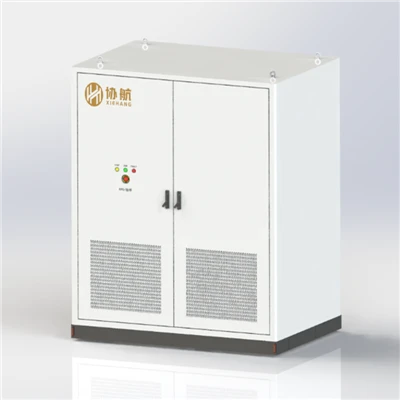
First, let’s get one thing straight: a containerized energy storage system isn’t just a bunch of batteries shoved into a shipping container. It’s a fully integrated, turnkey unit (most of the time) that fits inside a standard 20ft or 40ft shipping container—so you can move it easily, plug it in, and go, no construction delays on-site. That portability is why they’re so popular right now, but it’s also part of why pricing is all over the map.
Let’s start with the baseline: the core battery and inverter. Back in 2020, the average cost for a lithium-ion battery (the most common chemistry for CESS, right now) was around $150/kWh. By 2024, that’s dropped to about $80–$110/kWh. That’s a huge shift, and it’s the biggest driver of pricing. But wait—most of our standard 40ft CESS units hold between 1 and 2 MWh, right? So the battery alone on that would be $80k to $220k, depending on how much capacity you need. But then you have to add the inverter, which is the brain that turns the DC power from the batteries into AC power that works with the grid or your site. A good grid-tied inverter for a 1 MWh CESS is around $10–$15k, so that adds a chunk. If you need a larger inverter for higher power output, that goes up—say, $20–$30k for a 2 MWh unit.
Then there’s the container itself. Wait, not just any shipping container. We use certified, wind-and-water-tight 40ft high-cube containers (standard dry storage containers are fine, but sometimes we spec modified ones for extreme climates—like heated ones for Alaska, or shaded ones for Arizona). A basic used 40ft HC is around $3–$5k, but if you need it modified with things like insulation, temperature control, fire suppression, or ventilation, that adds $10–$30k. For example, a unit for a desert solar farm needs heavy-duty ventilation to keep the batteries from overheating, and a unit for a remote cold mine needs a heating system to keep the batteries working in -40°F weather. Those add-ons aren’t cheap, but skipping them means your CESS could fail prematurely, which no one wants.
Next up is all the balance of system (BOS) stuff that doesn’t make the headlines but makes the whole thing work. That includes the battery management system (BMS)—super important, because it keeps all the individual battery cells balanced, prevents overcharging, and extends the life of the whole pack. A good BMS for a 2 MWh unit is around $5–$8k. Then there’s the wiring, circuit breakers, monitoring software, and grounding systems. We usually allocate around $15–$25k for BOS on a standard 2 MWh CESS. Oh, and labor to assemble the unit in our factory—since we build them in-house, not at your site, that labor is cheaper than on-site construction, and it’s part of the price. For a standard unit, that’s another $10–$15k.
Wait, so if you add all that up for a basic 2 MWh CESS, that’s around $145k to $213k, which works out to about $72.5k to $106.5k per MWh. But that’s just the basic unit. Now, let’s talk about the factors that make that number jump or plummet, because that’s where most people get confused.
First: do you need grid-tied or off-grid? Grid-tied units are designed to sell excess power back to the utility, so their inverters are built for grid synchronization, and they might have grid support features like frequency regulation. Off-grid units are for remote areas with no utility, so they need larger inverters to handle peak loads, and maybe even backup generators to pair with them. An off-grid CESS usually costs 15–25% more than a grid-tied one, because of that extra inverter capacity and compatibility with other power sources. We had a customer last year that needed a 1.5 MWh off-grid unit for a gold mine in northern Ontario—they ended up paying around $160k total, which is about $107k per MWh, because of the extra heating and generator sync gear.
Second: battery chemistry. 90% of the CESS we sell uses lithium-iron-phosphate (LFP) batteries, which are cheaper, safer, and last longer than the old lithium-cobalt batteries. LFP is around $80–$90/kWh, vs. $100–$120/kWh for the old chemistry. But if you have a really niche use case—like a marine application, where weight matters more than cost—you might pay more for a different chemistry, which can add 20–30% to the price. Most of our customers don’t need that, so we stick with LFP, and that’s what we price our standard units on.
Third: customization and extra features. Let’s say you’re a small business in Hawaii, where electricity rates are super high, and you want a CESS to pair with your rooftop solar to cut your bills. You don’t need off-grid capability, but you do need advanced demand response software that can automatically discharge power during peak hours when rates are highest. Or maybe you need a container that’s built to fit through a narrow road to a remote solar field, so we have to modify the frame to reduce weight. These customizations don’t add a ton—usually 5–15% to the total cost—but they’re non-negotiable for some customers. We also offer things like 24/7 remote monitoring, which is $2–$3k a year, but that’s an ongoing cost, not part of the upfront price.
Fourth: project scale and shipping. If you’re buying one small 20ft unit (around 500 kWh) for your farm, the price will be higher per kWh than if you’re buying 10 units for a 10 MWh solar farm. Volume discounts are real in this industry—we give 5–10% off for orders of 5+ units, and up to 15% for 10+ units. Also, shipping: if you’re in the contiguous US, shipping a 40ft CESS is around $1–$2 per mile, so if you’re in Florida and we build it in Texas, that’s a few thousand bucks. If you’re shipping to Australia or Africa, shipping costs can add 10–20% to the total, because of container rates and customs fees. We’ve had customers in Nigeria pay an extra $30k to ship three 2 MWh units there, so that’s something to factor in.
Wait, also: warranties. That’s a big one that a lot of people miss. Our standard CESS comes with a 10-year warranty on the battery, and a 5-year warranty on all the other components. Some cheaper suppliers will sell you a unit with a 2-year battery warranty, which means they’re using lower-quality cells that will die in 5 years, not 10. A 10-year warranty adds about 5–8% to the upfront cost, but it’s worth it to avoid a $50k battery replacement 3 years down the line. We had a customer last year who bought a cheaper unit from a fly-by-night supplier—their battery started failing after 2 years, and the company went out of business, so they had to replace the whole pack for $80k. That’s a nightmare, and we make sure our customers know that upfront price matters less than long-term value.
Let’s also talk about real-world examples, because numbers are useless without context. Last quarter, we sold three 20ft CESS units (each 500 kWh) to a small agricultural co-op in Iowa, to pair with their 1 MW solar array. They’re grid-tied, have standard LFP batteries, and basic monitoring. The total price for all three was $126k, which works out to $84k per MWh. That’s right in the baseline range I mentioned earlier. Then, earlier this year, we sold one 40ft 2 MWh unit to a wind farm in Wyoming, to provide grid stability services. That unit had a few extra features for grid support, so the total price was $192k, which is $96k per MWh. And for that Canadian mining customer I mentioned earlier, the total was $160k for a 1.5 MWh off-grid unit, which is $107k per MWh. All of those are real numbers, not the made-up $100/kWh stat you see online.
Now, what about the hidden costs that people don’t talk about? Permitting, for one. Depending on where you’re installing your CESS, you might need to get a building permit, an electrical permit, or a grid interconnection agreement. Those can cost anywhere from $1k to $10k, and sometimes more if your local council is unfamiliar with containerized energy storage. Also, site prep: you need a flat, level pad to set the container on, and maybe a concrete base or gravel pad. That’s $2–$5k for a small unit, more for larger ones. And if you have to run power lines from the unit to your solar array or grid connection, that’s another $1–$3 per foot of wire. We usually walk customers through all of these upfront, so there are no surprise bills after you place your order.
Wait, should you buy a used CESS? That’s a question we get a lot. A used 40ft 2 MWh unit can cost anywhere from $80k to $120k, which sounds like a steal—until you realize that the battery’s cycle life is probably already halfway gone, or maybe it’s been sitting in a field for a year without maintenance, so the BMS is fried. We don’t sell used CESS, but we do refurbish old units for customers who want a cheaper option for temporary projects—like a construction site that only needs energy storage for 2 years. Refurbished units are about 30% cheaper than new, but they only come with a 2-year warranty, so that’s a trade-off.
Let’s circle back to the original question: how much does a CESS cost? For a basic new grid-tied LFP unit, you’re looking at $70k–$110k per MWh. For custom off-grid units, that jumps to $90k–$130k per MWh. And if you’re buying used or refurbished, it’s $40k–$80k per MWh, but with less warranty and shorter lifespan. That’s a range, not a hard number, but it’s way more accurate than the generic stats you’ll find on Google.
Here’s the thing: when you’re investing in energy storage, you’re not just buying a box of batteries. You’re buying a system that will save you money on electricity bills, generate revenue from grid services, or keep your operations running when the power goes out. Skimping on price by going with a cheap supplier or a used unit might save you a few thousand bucks upfront, but it could cost you tens of thousands in repairs, lost revenue, or replacement down the line.

If you’re ready to get a real quote for a CESS, all you need to do is tell us a few basics: how much capacity you need (in kWh or MWh), whether it’s grid-tied or off-grid, where you’re installing it, and any specific features you need (like extreme climate capability, monitoring software, etc.). We’ll put together a customized, all-inclusive quote that includes shipping, site prep, permits, and warranty, no hidden fees. Don’t go with a supplier that gives you a generic price over the phone—they’re probably leaving out all the little things that add up. Let’s talk through your project, and I’ll make sure you get a system that fits your needs and your budget.
C&I Energy Storage References:
- International Energy Agency. (2024). Global EV and Battery Storage Outlook.
- Wood Mackenzie Power & Renewables. (2024). Containerized Energy Storage Market Report.
- U.S. Energy Information Administration. (2023). Electricity Storage Technology Cost Benchmarks.
- Lithium-ion Battery Manufacturers Association. (2024). LFP Battery Cost and Performance Data.
Zhejiang Xiehang New Energy Equipment Co., Ltd.
As one of the most professional containerized energy storage system manufacturers and suppliers in China, our products have good reputation in the market. Please erst assured to wholesale custom made containerized energy storage system from our factory. If you have any enquiry about cooperation, please feel free to email us.
Address: No.5 Hechen Road, Zhouwangmiao Town, Haining, Jiaxing City, Zhejiang Province, China
E-mail: dan.wu@xiehang.net
WebSite: https://www.shineonpower.com/
