If you’ve ever stood under a vehicle or watched heavy machinery roll by, there’s a tiny but crucial part keeping everything running smooth: gear oil. And let’s be real, most of us—whether you’re a DIY car guy, a fleet manager, or someone running construction gear—have one burning question: How often do I actually need to change it? I’m not here to feed you generic “every 30,000 miles” numbers that work for some rigs but tank others. I’m a gear oil supplier, so I deal with this stuff every single day, talking to folks who’ve skipped a change and ended up with a busted transmission, and others who changed it too soon and wasted cash. Let’s break this down straight. Gear Oil

First, let’s get one thing clear: Gear oil isn’t the same as engine oil. Engine oil lubricates moving parts inside your motor, keeping temps down and washing away gunk. Gear oil is thicker, sticks to metal gears way better, and handles way more pressure—like, when your car’s gears are twisting with thousands of pounds of force, gear oil is the barrier that keeps them from grinding themselves to bits. It also seals out water, dust, and tiny metal shavings that creep in through seals over time. Skip a change, and that thick, protective oil turns into sludge, loses its pressure resistance, and lets those shavings scratch up gears. Do it too soon, and you’re dumping perfectly good fluid that’s still doing its job, throwing money away for no reason.
So, what’s the sweet spot? It depends on three big factors: what kind of gearbox you have, how hard you use it, and the environment it lives in. Let’s start with the most common stuff people ask about: passenger vehicles. For your average daily driver—like a sedan you use to commute to work, haul groceries, maybe a small camping trailer once a year—most car manuals say 30,000 to 60,000 miles. But wait, that’s the factory’s number, which is conservative. I’ve seen drivers with 80,000 miles on stock gear oil that’s still good, as long as they don’t do heavy towing. But if you’re towing 5,000+ pounds regularly, driving in stop-and-go traffic all summer, or hauling heavy loads? That number drops fast. Heat is the enemy here—when gear oil gets too hot, it breaks down way quicker. So if you’re always crawling in 90°F traffic with a trailer hitched, change it every 30,000 miles, tops.
Then there’s heavy equipment—fleet trucks, construction gear, farm tractors. This is where the big boys play, and the rules are way different. For on-road commercial trucks, most fleets stick to 100,000 to 150,000 miles, but again, it’s about use. If your truck’s delivering goods across the country, constant highway driving? 150k is fine. If it’s a dump truck that’s idling 8 hours a day at a construction site, hauling 20 tons of dirt? You’re looking at 50,000 to 75,000 miles max. Off-road gear? Farm tractors, excavators, that stuff? Even more brutal. Dust, mud, constant heavy loads. I’ve talked to a farmer who changed his tractor’s gear oil every 200 hours of run time, and another who did it every 500—guess which one’s gearbox is still running strong after 10 years? The guy who checked his oil’s condition, not just the clock.
Speaking of checking condition, that’s the trick most people miss. You don’t have to guess based on miles or hours. A quick visual check can tell you way more than any number on a gauge. Here’s what to do: Jack up your vehicle (or pop the drain plug on heavy gear, if you’re not comfortable doing that yourself), pull a sample of gear oil, and look at it. Good gear oil is amber to dark brown, clear, and has a slightly oily smell. If it’s gritty (like there’s tiny metal shavings in it), smells burnt, or is thick and sludge-like, it’s time to change it. Also, if you see water in there—gear oil that looks milky white? That’s water getting in from leaks or condensation, and it’s killing your gears fast. Even if you’re at 20,000 miles and it looks good, if you see water, change it immediately.
Now, let’s talk about myths, because there are a lot of ’em floating around. Myth number one: “I just changed it, so I never have to do it again.” Nope. Gear oil breaks down over time even if you’re not using the vehicle. If your car’s been sitting in the garage for 6 months, the oil still gets old—oxidizes, loses its additives, so it’s not as protective when you finally take it out. Myth number two: “Synthetic gear oil never needs changing.” Synthetic does last longer, that’s true—synthetic can go 50% longer than conventional, even 100% for some heavy synthetic blends. But it’s not immortal. It still picks up shavings, breaks down from heat, and needs to be replaced. A good synthetic gear oil for heavy use will still need a change at 100k miles, not forever. Another myth: “If it leaks a little, just top it off, no need to change.” If you’re topping off because it’s low, that’s fine—but if it’s leaking enough to need frequent top-ups, you’ve got a seal problem, and you need to fix that before more water and dust get in, and before you end up with too little oil to protect your gears.
Wait, also, what about different types of gear oil? GL-4, GL-5, limited-slip, synthetic, conventional—this stuff gets confusing. The type you use changes how often you change it too. Conventional gear oil is cheaper but breaks down faster, so you’ll need to change it more often (like 20-30k for heavy use, 40-50k for light use). Synthetic is more expensive up front, but lasts longer, so the cost per mile ends up lower. If you’re running a limited-slip differential, you need specific gear oil for that—using regular GL-5 can cause slip problems, and you should follow the manual’s change interval for that specific type.
Let me give you a real example to make this concrete. Last month, a guy brought in a semi-truck that was having trouble shifting. He’d followed the factory’s 150k mile interval, towed heavy freight every week, and his gear box was seized. We drained his old gear oil, and it was full of metal shavings and sludge—had it come to us a month earlier, we could’ve flushed it and saved his transmission. We talked him into switching to a high-performance synthetic gear oil, and now he changes it every 75k miles, way less often than he was paying for repairs. On the flip side, another guy came in because he changed his passenger car’s gear oil every 15k miles, and it turned out the oil was still perfect—he’d wasted like $200 a year doing unnecessary changes.
So, putting this all together, here’s a quick cheat sheet to remember: For light passenger use (commuter car, light towing, occasional use): 40k to 60k miles, or check condition every 30k. For heavy use (towing >5k lbs, stop-and-go traffic, fleet light trucks): 25k to 40k miles, check every 20k. For heavy equipment (fleet trucks, construction, farm gear): 50k to 75k miles for on-road heavy, 200-500 run hours for off-road, check oil condition regularly. And if you’re ever unsure, just pull a sample—if it looks bad, change it, no matter the mile number.
Now, I know some of you are thinking, “But what if my manual says a different number?” That’s okay—manuals are written to cover every possible use, so they’re conservative. If your use is way outside the “average” (like you’re a heavy hauler), you can adjust the interval. If you’re a super casual driver who never tows, you might even be okay going a bit longer than the manual says, as long as you check the oil.
At the end of the day, changing your gear oil isn’t just a chore—it’s cheap insurance. A transmission repair can cost thousands of dollars, while a gear oil change is a couple hundred bucks max. It’s way better to spend a little now to avoid a big headache later.
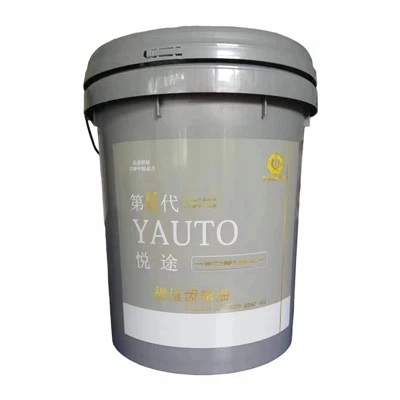
If you’re not sure what type of gear oil you need for your vehicle or equipment, or you want to confirm the right change interval for your specific use, hit us up to connect and chat through your needs. We work with all types of drivers and operators, from DIYers to big fleets, so we can help you figure out what works for your rig. Don’t wait for a breakdown to deal with this—stay ahead of it, and your gears will thank you.
Industrial Lubricating Oil References:
- Society of Automotive Engineers (SAE) J306: Gear Lubricants, Performance and Specification.
- American Petroleum Institute (API) Publication 1598: Automotive Gear Oils.
- National Fluid Power Association (NFPA) Technical Report 3.1.1: Hydraulic and Gear Fluid Condition Monitoring.
- Heavy Duty Manufacturers Association (HDMA) Maintenance Guidelines for Commercial Vehicles.
- International Organization for Standardization (ISO) 12189: Gear Lubricants – Determination of Extreme Pressure Properties.
MoGen Lubricating Oils
With abundant experience, we are one of the most professional gear oil manufacturers and suppliers in China. We warmly welcome you to wholesale custom made gear oil from our factory. If you have any enquiry about cooperation, please feel free to email us.
Address: No.8003 Chewang Rd, Economic Development Zone Of Jinan, Shandong Province, China 250301
E-mail: sales@mogenoils.com
WebSite: https://www.mogen-oil.com/
