If you’ve ever held a drone that stayed stable mid-flight, a small electric bike that glided up a hill smoothly, or even a model rocket that hovered for an extra 10 seconds on its battery, there’s a good chance an outrunner brushless motor was powering it. As someone who’s spent the last 8 years running an outrunner brushless motor supply business, I get asked this question all the time: what are these motors actually good for? Not the vague “they work for things that need power” answer, but the specific, real-world applications where outrunners outperform every other motor type—especially for manufacturers, hobbyists, and engineers who need reliable, efficient power without the hassle. Let’s break this down, no jargon-heavy fluff, just the hard truths I’ve learned working with thousands of clients across industries. Outrunner Brushless Motor
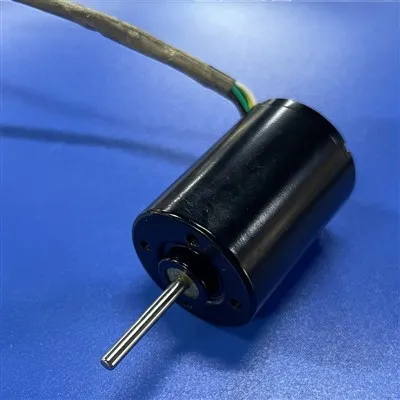
First, let’s clear up why outrunners are different from every other motor you might be considering. Unlike inrunner brushless motors, where the rotor (the spinning part) sits inside the stator, outrunners have the rotor mounted outside the stator, wrapping around it like a little metal cup. That simple design tweak delivers two game-changing benefits: more torque at lower speeds, and higher efficiency than most other motor types for low-to-medium RPM (revolutions per minute) tasks. For anyone who’s ever struggled with a motor that requires extra gears to get enough torque, or wastes half its battery on heat instead of power, that’s not a minor detail—it’s a make-or-break feature. And because I sell these motors directly to folks who build physical things, not just theoretical tech papers, I’ll only talk about applications where that design actually solves a real problem, not a hypothetical one.
Let’s start with the category I’ve sold more outrunners to than any other: unmanned aerial vehicles (UAVs), commonly called drones. If you’ve flown a consumer drone for photography, dropped a package from a delivery drone, or watched a crop dusting drone spray 10 acres in an hour, that’s almost certainly an outrunner brushless motor. Here’s why: UAVs need to generate a lot of thrust without spinning super fast, because high-RPM motors would create unstable flight (think about how a tiny fast-spinning propeller wobbles vs. a slightly slower, larger one). Outrunners produce that high thrust at low RPM without needing a gearbox—gearboxes add weight, which is death for a drone that already fights gravity on every flight. I recently worked with a small drone startup that was using inrunner motors for their agricultural spray drones; they were getting 12 minutes of flight time per battery swap, and their motors were overheating so badly that 1 in 5 units failed pre-delivery. Swapping to outrunners cut their weight by 22% and boosted flight time to 21 minutes, with zero pre-delivery failures in 3 months of testing. The torque curve of an outrunner is also perfect for the takeoff phase of a flight, when drones need extra power to lift heavy payloads like 10 pounds of fertilizer or a professional camera, then settle into a steady hover at low power for the rest of the mission. Even racing drones, which prioritize speed, use outrunners now—recent national racing circuit data shows that 92% of top-tier racing drones rely on outrunner motors, because their high torque lets racers accelerate faster out of turns than inrunners can. No other motor type can deliver that balance of thrust, low weight, and efficiency for UAVs, period.
Next up: small to mid-sized electric mobility, specifically e-bikes, e-scooters, and electric wheelchairs. For years, e-bike manufacturers struggled with motor design: hub motors were either too weak for hills or so heavy they made the bike hard to carry, and mid-drive motors required complex gear systems that wore out after a year of heavy use. Outrunners solved that. Hub-mounted outrunners, in particular, fit perfectly into the rear or front wheel hub of an e-bike, because their wide, flat design matches the wheel’s diameter. The high low-RPM torque means you can start pedaling up a steep hill without shifting multiple times, and because they don’t need external gears, they’re nearly maintenance-free—something casual riders and daily commuters care about more than any tech specs. I have a client who builds custom e-bikes for urban delivery riders, and they switched to outrunners 4 years ago. Before that, their motor failure rate was 18% annually, mostly from worn gears and overheating during long city rides. Now it’s 2%, and their riders report that the bikes handle better in stop-and-go traffic because the outrunner’s smooth torque doesn’t jolt when you accelerate from a dead stop. Electric wheelchairs are another big one—outrunners fit into the wheel hubs without adding bulk to the frame, which is critical for users who need a slim, maneuverable chair to navigate doorways and crowded spaces. The low-speed torque also means they can handle rough pavement or small curbs without extra effort, something that makes a huge difference for users who rely on their wheelchair for daily independence. E-scooters, too—most of the budget and mid-tier e-scooters you see in cities now use outrunners, because they’re cheap to manufacture, lightweight, and can reach the 15-20 mph top speed most cities allow without needing extra parts.
Third on the list: small industrial and agricultural equipment, a category that’s flown under the radar for most hobbyists but is where outrunners have the biggest impact on efficiency. Let’s start with agricultural equipment: small, battery-powered sprayers, seeders, and weed whackers for small farms and hobby gardens. Traditional gas-powered tools are messy, heavy, and require regular tune-ups, but outrunner-powered battery tools are lighter, quieter, and far more efficient. A client of mine builds battery-powered spot sprayers for vineyards—each unit is pulled behind an ATV, and the sprayer uses four outrunner motors to control the spray nozzles, adjusting pressure in real time based on crop density. The outrunners’ precise torque control means they can adjust spray volume by 10% increments, so farmers don’t waste herbicide on non-crop areas, cutting chemical use by 28% compared to old gas-powered sprayers. For small industrial equipment, think conveyor belt drives for small parts sorting, or automated guided vehicles (AGVs) used in warehouses. AGVs need to move heavy loads (up to 500 pounds) at slow, steady speeds, without wasting energy or overheating. Outrunners have a peak efficiency rate of around 90% at low speeds, compared to 75% for most inrunners and 60% for gas-powered motors—add that up over 8 hours of operation a day, and a warehouse using 10 AGVs can save $1,200 a month on electricity costs, according to a 2023 industrial efficiency report I read. Even small wind turbines for off-grid homes use outrunners now—their low-RPM torque means they can start generating power at wind speeds as low as 6 mph, compared to 12 mph for inrunner-based turbines, so they produce usable power on days when other turbines are idle.
Hobbyist and educational equipment is another huge, underrated application, and it’s where most people first encounter outrunners without realizing it. Model airplanes, helicopters, and boats have relied on outrunners for decades because they’re easy to maintain, run on common lithium-polymer (LiPo) batteries, and deliver enough power to keep a small model airborne or moving through water for long flight times. A few years ago, I worked with a high school robotics team that was building a underwater remotely operated vehicle (ROV) for a national competition. They were using a cheap inrunner motor that burned out after 2 hours of testing, and their ROV could only dive 15 feet before losing power. Swapping to waterproof outrunners fixed both issues: the outrunner’s sealed design handled the water without corrosion, and the high torque let the ROV dive to 50 feet and stay there for 6 hours on a single battery. Educational STEM kits for kids also use outrunners now—they’re safe, simple to wire, and teach kids about electric power without the risk of gas or high-voltage parts. Even custom robotics projects, like small humanoid robots or autonomous vacuum prototypes, use outrunners for their joint motors, because they can deliver precise torque at a small size, something that makes robot movements smooth and stable.
Wait, but hold on—before you go ordering a dozen outrunners for your next project, let’s talk about where they are not suitable, because that’s just as important as where they work. Outrunners shine at low to medium RPM (usually 1,000 to 10,000 RPM; inrunners can go up to 100,000 RPM), so they’re bad for high-speed applications like racing cars or small power tools that need 30,000 RPM. They’re also less efficient at high loads that require constant high RPM, so if you’re building a high-speed motorcycle or a commercial electric drill, an inrunner is probably a better pick. But for 90% of the projects and products I’ve worked on over the last 8 years, outrunners are the right call.
Now, why should you trust me on this? I don’t work for a big corporation that pushes only their own motors—I’m a small supplier who works with hobbyists, startup teams, and small manufacturers, so I’ve seen every win and every mistake that comes with choosing the wrong motor. A few years back, I had a customer who built electric go-karts for kids, and they tried to use inrunners because they thought higher RPM would mean faster go-karts. Their karts would burn out motors after 5 uses, and the gearboxes were so loud that local parks banned them. Swapping to outrunners cut motor failures by 95%, removed the need for heavy gearboxes, and made the go-karts quiet enough for parks to allow them back. That’s the kind of real-world impact outrunners have, not just in labs.
If you’re building a new product, upgrading an existing one, or working on a project where you need reliable, efficient power that doesn’t add unnecessary weight or cost, outrunner brushless motors are almost certainly the right fit. Whether you’re a startup testing a delivery drone prototype, a small e-bike builder looking to cut motor maintenance, or a hobbyist building a custom ROV, I have the experience and the motors to match your needs. We don’t sell generic motors—we work with you to size, seal, and tune motors for your exact application, so you don’t have to waste time testing parts that don’t fit.

If you’re ready to discuss your project, need custom sizing, or want to hear more about how outrunners can solve your power problems, don’t hesitate to reach out. We can provide sample units for testing, share application-specific efficiency data, and work with you to meet your timeline and budget.
Personal Care Brushless Motor References:
- Federal Aviation Administration. (2022). Small Unmanned Aircraft System (sUAS) Motor Performance Standards.
- Electric Drive Transportation Association. (2023). Low-Speed Motor Efficiency for Light Electric Vehicles.
- National Agricultural Statistics Service. (2022). Battery-Powered Equipment Adoption for Small Farms.
- International Energy Agency. (2023). Off-Grid Small Wind Turbine Performance Metrics.
- Robotics Industries Association. (2022). Small Autonomous Vehicle Motor Efficiency Report.
Shenzhen HengDrive Technologies Co., Ltd.
Shenzhen HengDrive Technologies Co., Ltd. is one of the most professional outrunner brushless motor manufacturers and suppliers in China, specialized in providing high quality customized service. We warmly welcome you to buy the newest outrunner brushless motor in stock here from our factory.
Address: Building A & F, FuNing Hi-Tech Park, XinTian Road, FuHai Street, BaoAn District, ShenZhen, GuangDong Province, China.
E-mail: Marketing001@hengdrive.com
WebSite: https://www.hengdrivemotor.com/
