Hey there, bearings enthusiasts and industry professionals! As a seasoned supplier of deep groove ball bearings, I’ve had the privilege of witnessing firsthand the diverse applications and unique characteristics of these essential components. Today, I’m excited to delve into a topic that often sparks questions and curiosity: the difference between single-row and double-row deep groove ball bearings. Deep Groove Ball Bearings
Structural Design
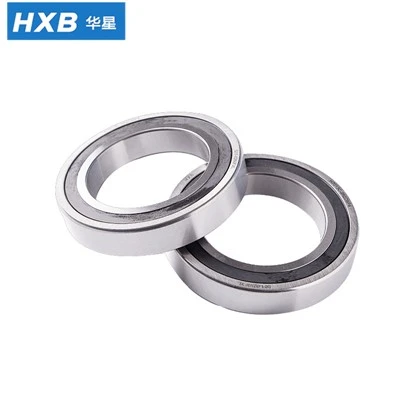
Let’s start with the basics – the structural design. Single-row deep groove ball bearings, as the name implies, feature a single row of balls arranged in a deep-groove raceway. This simple yet effective design allows for smooth rotation and high-speed operation. The deep grooves provide a large contact area between the balls and the raceways, which helps to distribute loads evenly and reduce friction. This design is ideal for applications where space is limited and high-speed rotation is required, such as electric motors, fans, and small machinery.
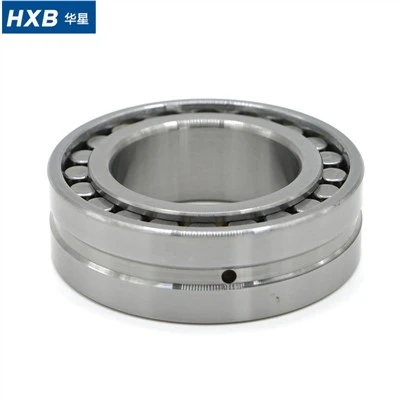
On the other hand, double-row deep groove ball bearings have two rows of balls in a single bearing unit. The two rows of balls are separated by a cage, which helps to maintain the proper spacing between the balls and ensure smooth operation. The additional row of balls provides increased load-carrying capacity and improved radial and axial load distribution. This makes double-row deep groove ball bearings suitable for applications where higher loads and greater stability are required, such as machine tools, automotive transmissions, and industrial equipment.
Load Capacity
One of the most significant differences between single-row and double-row deep groove ball bearings is their load capacity. Single-row deep groove ball bearings are designed to handle relatively light to moderate radial loads and some axial loads. They are suitable for applications where the load is primarily radial, such as in electric motors and pumps. However, if the application requires higher load-carrying capacity, a single-row bearing may not be sufficient.
Double-row deep groove ball bearings, on the other hand, are capable of handling much higher radial and axial loads. The additional row of balls provides increased contact area with the raceways, which helps to distribute the load more evenly and reduce stress on the bearing. This makes double-row deep groove ball bearings ideal for applications where heavy loads are present, such as in machine tools, construction equipment, and automotive applications.
Axial Load Capacity
In addition to radial load capacity, the axial load capacity of a bearing is also an important consideration. Single-row deep groove ball bearings can handle some axial load in one direction, but their axial load capacity is limited compared to double-row deep groove ball bearings. The deep-groove design of single-row bearings allows for some axial displacement, but excessive axial load can cause the balls to move out of the raceway and lead to premature failure.
Double-row deep groove ball bearings, on the other hand, are capable of handling significant axial loads in both directions. The two rows of balls provide a more stable structure, which helps to resist axial forces and prevent the balls from moving out of the raceway. This makes double-row deep groove ball bearings suitable for applications where both radial and axial loads are present, such as in automotive transmissions and machine tool spindles.
Speed Rating
Another important factor to consider when choosing between single-row and double-row deep groove ball bearings is the speed rating. The speed rating of a bearing is determined by several factors, including the bearing design, lubrication, and operating conditions.
Single-row deep groove ball bearings are generally capable of higher speeds than double-row deep groove ball bearings. The single-row design has less friction and inertia, which allows for smoother rotation and higher speeds. However, the speed rating of a single-row bearing can be limited by factors such as the size of the balls, the cage design, and the lubrication method.
Double-row deep groove ball bearings, on the other hand, have a lower speed rating than single-row bearings. The additional row of balls and the increased mass of the bearing assembly result in higher friction and inertia, which can limit the maximum operating speed. However, with proper lubrication and design, double-row deep groove ball bearings can still achieve relatively high speeds in many applications.
Space Requirements
Space requirements are often a critical factor in bearing selection. Single-row deep groove ball bearings are generally more compact than double-row deep groove ball bearings, making them suitable for applications where space is limited. The single-row design allows for a smaller outer diameter and width, which can be beneficial in applications such as electric motors, small machinery, and aerospace equipment.
Double-row deep groove ball bearings, on the other hand, are larger and more bulky than single-row bearings. The additional row of balls and the cage require more space, which can make them less suitable for applications where space is limited. However, in applications where higher load capacity and greater stability are required, the larger size of double-row bearings may be necessary.
Application Examples
To illustrate the differences between single-row and double-row deep groove ball bearings, let’s look at some specific application examples.
Single-Row Deep Groove Ball Bearings
- Electric Motors: Single-row deep groove ball bearings are commonly used in electric motors due to their high-speed capabilities and relatively low cost. They are suitable for applications where the load is primarily radial and the speed is relatively high.
- Fans and Blowers: Fans and blowers often use single-row deep groove ball bearings to support the rotating shaft. The smooth rotation and high-speed capabilities of these bearings make them ideal for these applications.
- Small Machinery: Single-row deep groove ball bearings are also commonly used in small machinery, such as power tools, household appliances, and robotics. Their compact size and low cost make them a popular choice for these applications.
Double-Row Deep Groove Ball Bearings
- Machine Tools: Machine tools, such as lathes, milling machines, and grinders, require high-precision bearings with high load-carrying capacity. Double-row deep groove ball bearings are often used in these applications to support the rotating spindles and provide the necessary stability and accuracy.
- Automotive Transmissions: Automotive transmissions require bearings that can handle high loads and axial forces. Double-row deep groove ball bearings are commonly used in transmissions to support the gears and shafts and ensure smooth operation.
- Industrial Equipment: Industrial equipment, such as conveyors, pumps, and compressors, often require bearings that can handle heavy loads and harsh operating conditions. Double-row deep groove ball bearings are suitable for these applications due to their high load-carrying capacity and durability.
Conclusion
In conclusion, the choice between single-row and double-row deep groove ball bearings depends on several factors, including the application requirements, load capacity, speed rating, and space availability. Single-row deep groove ball bearings are ideal for applications where space is limited and high-speed rotation is required, while double-row deep groove ball bearings are more suitable for applications where higher loads and greater stability are needed.
As a supplier of deep groove ball bearings, I understand the importance of choosing the right bearing for your application. Our team of experts can help you select the most suitable bearing based on your specific requirements and provide you with the highest quality products and services.
High Speed Spindle Bearings If you have any questions or would like to discuss your bearing requirements, please don’t hesitate to contact us. We look forward to working with you!
References
- Harris, T. A., & Kotzalas, M. N. (2007). Rolling Bearing Analysis (5th ed.). Wiley.
- Schaeffler Group. (n.d.). Deep Groove Ball Bearings. Retrieved from the Schaeffler official website.
- SKF Group. (n.d.). Deep Groove Ball Bearings – Product Catalog. Retrieved from the SKF official website.
Hangzhou Huaxing Kechuang Holding Group Co., Ltd.
Hangzhou Huaxing Kechuang Holding Group Co., Ltd. is one of the leading manufacturers and suppliers of deep groove ball bearings in China, featured by quality products and good service. Please rest assured to buy bulk durable deep groove ball bearings from our factory. Welcome to view our website for more information.
Address: No.553 Yingbin Road, Linping, Hangzhou, 311100, China
E-mail: wmb@huaxingbearing.com
WebSite: https://www.hxbbearing.com/
