In the realm of electrical power systems, high – voltage circuit breakers (HVCBs) are indispensable components. They play a critical role in protecting the electrical network by interrupting fault currents and isolating faulty sections. Ensuring the reliability of HVCBs is of utmost importance for the stable and safe operation of the power grid. As a high – voltage circuit breaker supplier, I’ve witnessed firsthand how diagnostic techniques have transformed the reliability of these essential devices. High-voltage Circuit Breaker
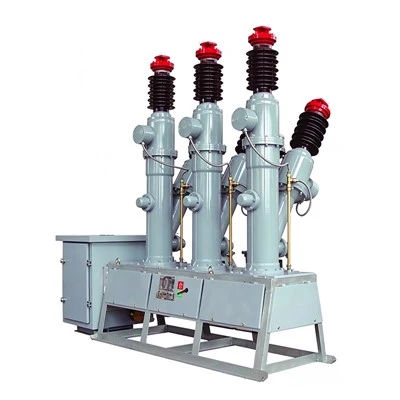
The Significance of High – Voltage Circuit Breaker Reliability
The power grid is a complex and interconnected system. A single malfunction of a high – voltage circuit breaker can lead to widespread power outages, equipment damage, and even pose a risk to human safety. For industrial consumers, power disruptions can result in significant economic losses due to production halts. In the case of critical facilities such as hospitals and data centers, reliable power supply is a matter of life and death.
Reliable HVCBs are essential for maintaining the integrity of the power system. They must be able to operate accurately and consistently under various conditions, including normal and abnormal electrical loads. A failure of an HVCB to perform its intended function can trigger a chain reaction of faults, leading to cascading blackouts. Therefore, improving the reliability of HVCBs is not only a technical challenge but also a social and economic imperative.
Traditional Maintenance Approaches and Their Limitations
In the past, maintenance of high – voltage circuit breakers was mainly based on scheduled maintenance. This approach involves performing regular inspections, tests, and overhauls at fixed intervals, regardless of the actual condition of the equipment. While scheduled maintenance has its merits, it also has several drawbacks.
One of the main limitations of scheduled maintenance is the lack of flexibility. It often leads to unnecessary maintenance, where perfectly healthy components are disassembled and inspected, increasing labor and material costs. On the other hand, it may also miss potential faults that develop between maintenance intervals. This can result in unexpected failures and reduced system reliability.
Another issue with traditional maintenance is that it relies heavily on the experience and judgment of maintenance personnel. The diagnostic methods used are often subjective and may not accurately detect hidden faults. For example, visual inspections can only detect obvious signs of damage, while electrical tests may not be sensitive enough to detect early – stage faults.
The Emergence of Diagnostic Techniques
In recent decades, diagnostic techniques have emerged as a powerful tool for improving the reliability of high – voltage circuit breakers. These techniques are based on the principle of condition – based maintenance, which involves continuously monitoring the health status of the equipment and performing maintenance only when necessary.
There are several types of diagnostic techniques commonly used for HVCBs. One of the most important is electrical testing. This includes measuring parameters such as contact resistance, dielectric strength, and leakage current. Contact resistance is a critical parameter that reflects the condition of the breaker contacts. An increase in contact resistance can indicate wear, corrosion, or poor contact, which can lead to overheating and eventual failure. By regularly monitoring contact resistance, maintenance personnel can detect potential problems early and take appropriate measures.
Dielectric strength testing is used to evaluate the insulation properties of the breaker. A decrease in dielectric strength may indicate insulation degradation, which can be caused by factors such as contamination, moisture, or aging. Leakage current measurement is another important electrical test. It can detect insulation faults and ground faults in the breaker.
Another type of diagnostic technique is mechanical testing. High – voltage circuit breakers are mechanical devices, and their mechanical components, such as springs, linkages, and operating mechanisms, are subject to wear and tear. Mechanical testing involves measuring parameters such as opening and closing times, travel distance, and contact bounce. These parameters can provide valuable information about the mechanical condition of the breaker. For example, an abnormal opening or closing time may indicate a problem with the operating mechanism, while excessive contact bounce can cause arcing and damage to the contacts.
Thermal monitoring is also an important diagnostic technique. By using infrared thermography, maintenance personnel can detect hot spots in the breaker, which may indicate overheating due to high contact resistance or other problems. This non – invasive technique allows for quick and easy identification of potential issues without the need for disassembly.
Real – World Applications and Benefits
As a high – voltage circuit breaker supplier, I’ve seen numerous real – world applications of diagnostic techniques and the significant benefits they bring. In one case, a power utility company was experiencing frequent failures of its HVCBs. After implementing a comprehensive diagnostic program that included electrical, mechanical, and thermal testing, the utility was able to identify several early – stage faults that would have otherwise gone undetected. By addressing these issues promptly, the utility was able to reduce the failure rate of its HVCBs by more than 50% and significantly improve the reliability of its power grid.
Another advantage of diagnostic techniques is that they can extend the service life of HVCBs. By detecting and addressing problems early, maintenance can be performed in a timely and targeted manner, reducing the wear and tear on the equipment. This not only saves costs associated with premature replacement but also reduces the environmental impact of manufacturing and disposing of new breakers.
In addition, diagnostic techniques can improve the safety of maintenance operations. Since the condition of the breaker is continuously monitored, maintenance personnel can plan and execute maintenance tasks more effectively. They can avoid risky situations where they have to work on potentially faulty equipment without proper knowledge of its condition.
Challenges and Future Directions
While diagnostic techniques have significantly improved the reliability of high – voltage circuit breakers, there are still several challenges that need to be addressed. One of the main challenges is the integration of different diagnostic systems. In many cases, different diagnostic techniques are used independently, and the data collected from these systems may not be effectively integrated. This can make it difficult for maintenance personnel to get a comprehensive view of the breaker’s health status.
Another challenge is the interpretation of diagnostic data. The data collected from diagnostic tests can be complex and difficult to analyze. There is a need for advanced data analysis techniques and algorithms that can accurately identify faults and predict the remaining useful life of the breaker.
Looking to the future, there are several promising directions for the development of diagnostic techniques. The use of artificial intelligence and machine learning algorithms is expected to play an increasingly important role in the analysis of diagnostic data. These technologies can learn from historical data and identify patterns that may indicate potential faults. In addition, the development of wireless sensor networks and the Internet of Things (IoT) will enable real – time monitoring of HVCBs, providing more accurate and timely information about their condition.
Conclusion
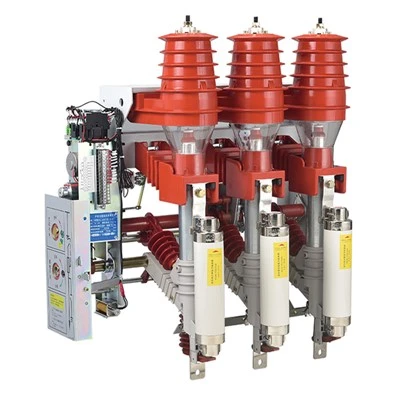
As a high – voltage circuit breaker supplier, I’m excited about the potential of diagnostic techniques to further improve the reliability of our products. These techniques have already proven to be effective in reducing failure rates, extending service life, and improving safety. However, there are still challenges that need to be overcome, and continuous research and development are required.
High and Low Voltage Switchgear If you’re in the market for high – voltage circuit breakers or are looking to improve the reliability of your existing equipment, I encourage you to reach out to discuss how our products and diagnostic solutions can meet your needs. Our team of experts is committed to providing you with the highest quality products and the most advanced diagnostic techniques to ensure the reliable operation of your power system.
References
- Blackburn, J. L. (2007). Protective Relaying: Principles and Applications. CRC Press.
- Grigsby, L. L. (Ed.). (2007). Electric Power Engineering Handbook. CRC Press.
- Sheng, S., & Li, X. (2016). Condition Monitoring and Fault Diagnosis of High – Voltage Circuit Breakers: A Review. IEEE Access, 4, 2378 – 2392.
Zhongtai Electric Power Technology Co., Ltd.
With abundant experience, we are one of the most professional high-voltage circuit breaker manufacturers and suppliers in China. We warmly welcome you to wholesale bulk customized high-voltage circuit breaker from our factory. If you have any enquiry about quotation, please feel free to email us.
Address: High-tech Industrial Park, Chongren County, Fuzhou City, Jiangxi Province (No. 261 Yingbin Avenue)
E-mail: info@zhongtaielectric.com
WebSite: https://www.zhongtaipower.com/
