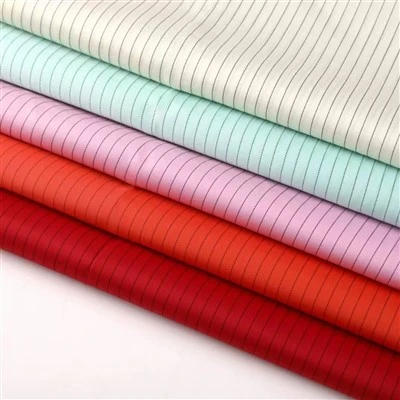
The printing industry is a complex and dynamic field that demands high precision and quality control. In this environment, the issue of static electricity can pose significant challenges, affecting both the printing process and the final product. As a supplier of anti-static fabric, I have witnessed firsthand the potential benefits that anti-static fabric can bring to the printing industry. In this blog, I will explore whether anti-static fabric can be used in the printing industry, discussing its advantages, potential applications, and considerations. Anti-static Fabric
Understanding Static Electricity in the Printing Industry
Static electricity is a common occurrence in the printing industry, generated by various processes such as friction between materials, high – speed movement of printing equipment, and the separation of different layers of materials. The presence of static electricity can lead to several problems. Firstly, it can attract dust and debris to the printing materials, causing blemishes on the printed surface. This not only affects the aesthetic appeal of the final product but can also lead to flaws in more high – tech printing applications, such as printed circuit boards. Secondly, static electricity can cause materials to stick together, making it difficult to handle and feed them through the printing machines. This can result in jams, reduced efficiency, and increased downtime for maintenance.
Advantages of Anti – Static Fabric in the Printing Industry
Dust and Debris Prevention
One of the primary advantages of using anti – static fabric in the printing industry is its ability to prevent the accumulation of static electricity. By eliminating or reducing static charges, the fabric helps to minimize the attraction of dust and debris to the printing materials. This is particularly important in industries where a clean and flawless print is essential, such as in the production of high – end packaging, labels, and photographic prints. For example, in the printing of luxury perfume boxes, any dust particles on the surface can ruin the overall look of the product. Anti – static fabric can be used to line the storage areas or the handling equipment, ensuring that the materials remain clean throughout the printing process.
Improved Material Handling
Anti – static fabric also improves the handling of printing materials. Since it reduces static charges, materials are less likely to stick together, which makes it easier to feed them through the printing machines smoothly. This can lead to increased productivity as there are fewer machine jams and interruptions. In a large – scale printing operation, even a small reduction in downtime can result in significant savings in terms of time and cost. For instance, in a commercial printing press that produces thousands of brochures per day, the use of anti – static fabric can help maintain a continuous printing process, minimizing the need for frequent manual intervention to unstick the paper.
Protection of Printing Equipment
Static electricity can also cause damage to printing equipment over time. The electrical discharges can affect the sensitive electronic components of the machines, leading to malfunctions and reduced lifespan. Anti – static fabric acts as a protective barrier, dissipating static charges and preventing them from reaching the equipment. This not only protects the investment in the printing machinery but also reduces the frequency of repairs and maintenance, thereby saving on long – term costs.
Potential Applications of Anti – Static Fabric in the Printing Industry
Printing Workshop Flooring
One of the most common applications of anti – static fabric in the printing industry is as flooring material in the workshop. By covering the floor with anti – static fabric, the movement of workers and equipment can be grounded, preventing the build – up of static electricity. This is especially important in areas where there is a high volume of foot traffic and material handling. For example, in a large – scale offset printing workshop, the constant movement of pallets, paper rolls, and printing presses can generate a significant amount of static. Anti – static flooring can help to dissipate this static, creating a safer and more efficient working environment.
Machine Covers and Linings
Anti – static fabric can also be used to make covers and linings for printing machines. These covers can protect the machines from dust and debris while also preventing static electricity from building up on the machine surfaces. Additionally, they can be used to line the internal compartments of the machines where the printing materials are stored or transported. For example, in a digital printing machine, the paper feed trays can be lined with anti – static fabric to ensure smooth paper feeding and prevent static – related jams.
Employee Clothing
Another potential application is in the clothing worn by employees in the printing industry. Anti – static work uniforms can help to reduce the static charges generated by the movement of the workers themselves. This is particularly important in environments where there is a high risk of static – induced fires or explosions, such as in the printing of flammable inks or solvents. By wearing anti – static clothing, employees can minimize the risk of electrostatic discharge, ensuring a safer working environment.
Considerations When Using Anti – Static Fabric in the Printing Industry
Compatibility with Printing Materials
When choosing anti – static fabric for use in the printing industry, it is important to consider its compatibility with the printing materials. Some fabrics may release fibers or chemicals that could contaminate the printing materials or affect the quality of the print. For example, in the printing of food packaging, the anti – static fabric used must be food – grade and non – toxic to ensure the safety of the final product.
Durability and Maintenance
The anti – static fabric should also be durable enough to withstand the harsh conditions of the printing environment. It should be resistant to wear and tear, as well as to the chemicals and solvents used in the printing process. Additionally, it should be easy to clean and maintain. Regular cleaning is essential to ensure that the anti – static properties of the fabric are maintained over time.
Cost – Effectiveness
Cost is always a consideration in any business decision. While anti – static fabric can offer significant benefits in the printing industry, it is important to evaluate its cost – effectiveness. This includes considering the initial purchase price, as well as the long – term savings in terms of reduced downtime, improved product quality, and lower maintenance costs.
Conclusion
In conclusion, anti – static fabric can be a valuable asset in the printing industry. Its ability to prevent static electricity, reduce dust and debris, improve material handling, and protect printing equipment makes it a suitable choice for various applications. However, careful consideration must be given to factors such as compatibility with printing materials, durability, maintenance, and cost – effectiveness.
Reflective Fabric If you are in the printing industry and are interested in exploring the benefits of anti – static fabric for your operations, I encourage you to reach out to me. I am more than happy to discuss your specific needs and provide you with detailed information about our anti – static fabric products. We can work together to find the best solutions to meet your requirements and enhance the efficiency and quality of your printing processes. Let’s start this conversation and take your printing business to the next level.
References
- "Static Electricity in the Printing Industry: Causes, Effects and Solutions" – A technical report on the issues of static electricity in printing.
- "Textile Materials for Industrial Applications" – A comprehensive book on the use of textiles in different industries, including printing.
- "Safety Standards for the Printing Industry" – A set of standards that highlight the importance of static control in a printing environment.
Wujiang Jiashunxin Spray Weaving Co., Ltd.
As one of the most professional anti-static fabric manufacturers and suppliers in China, we’re featured by quality products and good service. We warmly welcome you to wholesale bulk customized anti-static fabric from our factory. If you have any enquiry about free sample, please feel free to email us.
Address: Xingli New Village, Lili Town, Wujiang District, Suzhou City, Jiangsu Province
E-mail: xuzhiqiang20260525@163.com
WebSite: https://www.shunbangfabric.com/
