Can collaborative robots be used for welding tasks? Collaborative Robot
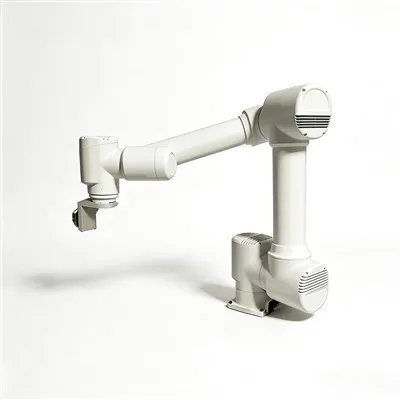
Hey there! I’m a rep from a collaborative robot (cobot) supplier, and I get this question a lot: Can cobots be used for welding tasks? Well, let me tell you, the answer is a big yes! In fact, cobots are revolutionizing the welding industry in some pretty amazing ways.
First off, let’s talk about what cobots are. Unlike traditional industrial robots that are often locked away in cages for safety reasons, cobots are designed to work alongside humans. They’re equipped with sensors that allow them to detect when a human is nearby and adjust their movements accordingly, so there’s no need for those big, bulky safety barriers. This makes them super flexible and easy to integrate into existing workspaces.
Now, let’s dive into why cobots are a great fit for welding tasks. One of the biggest advantages is precision. Welding requires a high level of accuracy, and cobots are really good at that. They can be programmed to follow a specific path with extreme precision, which means you get consistent, high-quality welds every time. This is especially important in industries where quality is key, like automotive or aerospace.
Another benefit is efficiency. Cobots can work 24/7 without getting tired or making mistakes due to fatigue. They can also perform repetitive welding tasks much faster than a human worker. This not only increases productivity but also reduces the risk of human error. For example, if you have a long production run of the same welding job, a cobot can knock it out in no time, leaving your human workers free to focus on more complex tasks that require a human touch.
Cost is also a major factor. Buying and setting up a traditional industrial robot can be really expensive. You need to invest in a large safety enclosure, and the programming can be quite complicated. Cobots, on the other hand, are much more affordable. They’re easier to install and program, and you don’t have to spend a fortune on additional safety equipment. This makes them a great option for small and medium-sized businesses that want to improve their welding processes without breaking the bank.
But what about the technical aspects of welding? Can cobots really handle it? Well, cobots can be equipped with all sorts of welding tools. Whether it’s MIG (Metal Inert Gas) welding, TIG (Tungsten Inert Gas) welding, or even spot welding, there are cobot solutions available. The cobots can be programmed to control the welding parameters such as voltage, current, and travel speed, ensuring that the weld meets the required specifications.
One of the coolest things about cobots is their ease of use. You don’t need to be a coding expert to program them. Most cobots come with a user-friendly interface that allows operators to teach the robot the welding path by simply guiding the robot arm through the desired motions. This is called "lead-through programming," and it’s a quick and intuitive way to get the cobot up and running.
Let’s talk about safety again. As I mentioned earlier, cobots are designed to work safely with humans. In a welding environment, there are some hazards such as sparks, fumes, and high temperatures. Cobots can be equipped with additional safety features to protect both the robot and the human workers. For example, they can have heat shields to protect them from the high temperatures of the welding process, and they can be integrated with ventilation systems to remove the welding fumes.
In terms of real-world applications, we’ve seen cobots being used in a wide range of welding jobs. For example, in the manufacturing of small metal parts, a cobot can be set up to weld the parts together with high precision. In the construction industry, cobots can be used to weld structural steel components on-site, improving the efficiency of the building process.
However, it’s not all sunshine and rainbows. There are some limitations to using cobots for welding. One of the main limitations is the payload capacity. Some cobots may not be able to handle very heavy welding guns or large workpieces. But there are now high-payload cobots available on the market that can overcome this issue. Another limitation is the speed compared to some high-speed industrial robots. But for many applications, the precision and flexibility of cobots more than make up for the slightly slower speed.
Now, let’s talk about how you can get started with cobots for your welding tasks. First, you need to assess your specific welding needs. What type of welding do you do? What is the size and shape of your workpieces? How many welds do you need to perform per day? Once you have a clear understanding of your requirements, you can choose the right cobot for your application.
You’ll also need to consider the programming and training. While cobots are relatively easy to program, it’s still a good idea to have some training to make the most of their capabilities. Many cobot suppliers offer training programs to help your operators get up to speed quickly.

If you’re thinking about incorporating cobots into your welding processes, I highly recommend reaching out to a professional cobot supplier. We can provide you with expert advice on which cobot is best for your needs, help you with the installation and programming, and offer ongoing support. Whether you’re a small workshop or a large manufacturing plant, cobots can offer significant benefits for your welding tasks. So, if you’re interested in improving the quality, efficiency, and cost-effectiveness of your welding operations, don’t hesitate to get in touch. Let’s have a chat about how cobots can transform your business.
Six-Axis Collaborative Robot References
- Robotics Industry Association (RIA). General information about collaborative robots and their applications in manufacturing.
- Welding Journal. Articles on the latest trends and technologies in welding, including the use of robots.
- Industry trade shows and conferences where cobot manufacturers showcase their latest welding solutions.
Xinweilai Intelligent Technology (Shandong) Co., Ltd.
As one of the most professional collaborative robot manufacturers and suppliers in China, we’re featured by quality products and good service. Please rest assured to wholesale bulk customized collaborative robot from our factory. For pricelist and quotation, contact us now.
Address: Jinghua Road, Economic and Technical Development Zone, Dezhou City, Shandong Province
E-mail: liujiqing@xinweilaiznkj.com
WebSite: https://www.xinweilaiznkj.com/
