If you’ve ever walked through a busy port yard, a stacked shipping container depot, or a sprawling intermodal rail yard, you’ve almost certainly seen reach stackers at work. These machines are the unsung heroes of global logistics, able to lift, move, and stack containers that weigh tens of thousands of pounds—all with precision that keeps supply chains moving on schedule. As a reach stacker supplier, I talk to operators, yard managers, and procurement teams every week who mix up the different types of reach stackers, not knowing which one fits their specific operation. That’s why I’m breaking down the most common categories, their use cases, and what makes each unique, so you can make an informed decision for your business. Reach Stacker
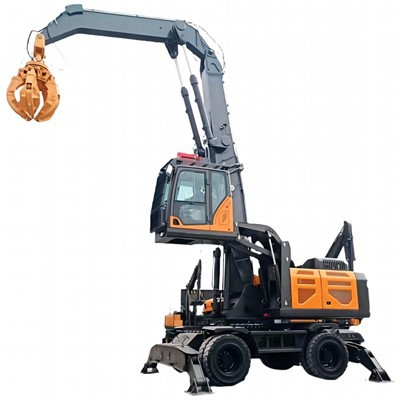
First, let’s start with the basics: a reach stacker, at its core, is a heavy-duty lifting vehicle designed primarily for intermodal containers (ISO containers, the standard 20ft, 40ft, and 45ft units you see on cargo ships). Unlike cranes that load directly onto ships, reach stackers work in the “middle mile” of container logistics, moving and stacking containers within a depot or between transport modes like trucks and railcars. Their key feature is a telescoping boom at the front that lets operators “reach” over the top of stacked containers to place or retrieve them without needing to align the entire vehicle. This is what sets them apart from smaller forklifts, which can’t handle full container weights or stack multiple high tiers safely.
Now, when it comes to categorizing reach stackers, the primary split comes down to their lifting capacity and the number of container tiers they can stack. The three main categories you’ll encounter in nearly every logistics operation are empty container reach stackers, full container reach stackers, and heavy-lift reach stackers. Let’s dive into each.
Empty container reach stackers, as the name suggests, are built exclusively for handling unloaded containers. Most empty containers weigh between 2,000 and 6,000 pounds, far less than their fully loaded counterparts, so these machines are optimized for speed and efficiency rather than brute force. A big advantage here is their ability to stack empty containers up to 7 or 9 tiers high—something full container stackers can’t do, because lighter loads let them tuck containers tighter and work in more compact spaces. I work with a lot of small depots and retail logistics teams that use empty container reach stackers for short-term storage of returned cargo containers or seasonal inventory. One client, a regional retail chain that uses containers to store seasonal display equipment, told me their empty reach stacker cuts down yard space usage by 40% compared to just parking containers on the ground. What makes empty reach stackers different from other types is their smaller turning radius too. Most yard spaces for empty containers are cramped, so these machines are designed to maneuver in tight aisles, often with a 20% shorter wheelbase than full container models. They also use a smaller engine and lower fuel consumption, which is a big plus for operations that run these machines 10 hours a day, six days a week. The main downside is obvious: they can’t handle a fully loaded container. If you try to lift a 40,000-pound freight container with an empty reach stacker, you’ll risk damaging the machine and creating a safety hazard.
Next up, full container reach stackers are the workhorses of port and intermodal rail yards, built to handle fully loaded ISO containers, which typically weigh between 40,000 and 67,000 pounds. These machines are the most versatile type, designed to stack containers up to 5 tiers high, and they can pick containers from the ground, from truck chassis, or from railcars—making them the go-to for most medium to large logistics operations. I’ve seen full container reach stackers in action at every major port on the East Coast and Midwest rail hubs, and their design balances power and flexibility perfectly. A key feature of full container reach stackers is their spreader, the attachment at the end of the boom that locks onto the container’s corner castings. Most full container stackers use a twin-lift spreader, which lets them pick two 20ft containers at once, doubling their efficiency. That’s a game-changer for busy yards where every move counts. For example, a rail yard that handles 100 container moves a day can cut that to 50 with a twin-lift spreader, reducing cycle time and lowering operational costs. Full container reach stackers also come in two sub-types: empty handler variants for light yard moves and heavy-duty models for maximum capacity. The standard full container stacker can lift a 40ft loaded container up to 10 feet high, which is the height of a typical truck, so operators can load a container directly onto a truck chassis without needing an extra crane. The biggest thing to consider here is ground clearance. Full container reach stackers are heavier and have larger tires than empty models, so they need firm, paved surfaces. They won’t work on loose gravel or uneven ground, which limits their use to purpose-built depots.
Then there’s the heavy-lift reach stacker, the largest and most powerful of the three main categories. These machines are built to handle extra-heavy or oversized loads, like 45ft high cube containers, refrigerated (reefer) containers with their own added weight, or special-purpose units like tank containers for hazardous materials. Most heavy-lift reach stackers can lift loads between 70,000 and 100,000 pounds, and some specialized models go even higher. The biggest difference here is tier capacity: heavy-lift models can stack containers up to 7 tiers high, which is impressive given their weight. I recently worked with a client at a Gulf Coast port that handles a lot of heavy machinery parts and chemical cargo, and their heavy-lift reach stacker has cut their loading time for oversized containers in half compared to the port’s older crane system. Unlike full container stackers, heavy-lift reach stackers have reinforced booms and undercarriages to handle the extra weight, and they often have advanced safety features like load monitoring systems that alert operators if they’re approaching the machine’s weight limit. That’s critical for hazardous materials, where even a small miscalculation can lead to a major incident. The trade-off, though, is cost and maneuverability. Heavy-lift reach stackers are 20-30% more expensive than full container models, and their larger size means they need more space to operate—wider aisles and larger yard areas. They also have higher fuel consumption, so they’re not ideal for operations that only handle a small number of heavy loads per week. It’s important to note that heavy-lift reach stackers are different from rough-terrain reach stackers, which is another category I often get asked about. Wait—did I mention rough-terrain models? Yeah, that’s a fourth type that many suppliers group separately, and it’s worth covering because it fills a unique niche.
Rough-terrain reach stackers are designed for uneven, unpaved ground, like construction sites, remote mining depots, or temporary storage yards that don’t have paved surfaces. Unlike the three main categories, these machines have specialized tires with deep treads, higher ground clearance, and four-wheel drive to navigate mud, gravel, and uneven terrain. Most rough-terrain reach stackers are built in smaller sizes than heavy-lift models, with lifting capacities between 20,000 and 50,000 pounds, so they can handle standard containers but aren’t built for full heavy loads. I’ve seen these used at remote construction sites where containers are used to store tools and materials, far from a main port or paved depot. A construction client I work with told me their rough-terrain reach stacker saved them tens of thousands of dollars because they didn’t have to invest in paving a temporary storage yard for a 12-month project. The downside, though, is that they can’t stack containers as high as full or heavy-lift models—usually up to 3 tiers, which means they take up more yard space in the long run. They also have higher maintenance costs because of the heavy wear and tear on tires and undercarriages from rough ground.
Another niche category is the empty container handler with a top picker attachment, sometimes called a “reach stacker for empties” but distinct from the standard empty model. These are designed specifically for retrieving empty containers from the top of a stack, which is useful in yards with very high empty container storage. Standard empty reach stackers can only reach a few tiers, but top picker models can reach up to 10 tiers, making them ideal for large-scale empty container depots that handle thousands of units a month.
Now, when you’re choosing the right reach stacker for your operation, there are a few key factors to keep in mind. First, ask yourself: what’s the average weight of the containers I’m handling? If you’re mostly moving empty retail displays, an empty reach stacker is perfect. If you’re loading full cargo onto rail or trucks, go with a full container model. If you handle heavy industrial or hazardous cargo, a heavy-lift model is worth the investment. Next, consider your yard space: do you have paved ground, or do you need to work on rough terrain? Tight aisles? That will narrow down your options a lot.
As a reach stacker supplier, I always tell customers not to overbuy. It’s tempting to get a heavy-lift machine if you might handle a heavy load once a year, but that extra cost and lower maneuverability can eat into your profits. Conversely, buying an empty reach stacker for occasional full container moves is a safety risk, not just an efficiency one. Safety is another big point: all reach stackers should have advanced features like load moment indicators (LMIs) that stop the machine if it exceeds its weight limit, anti-rollback systems for slopes, and 360-degree cameras to eliminate blind spots. I’ve seen too many accidents happen because operators tried to push a machine beyond its capacity, and no operation can afford that downtime or the risk of injury.

At the end of the day, the right reach stacker is the one that matches your daily workload, yard conditions, and future growth. If you’re not sure which category fits your needs, there’s no shame in reaching out for guidance—whether you’re a small business launching a new container storage yard or a major port looking to upgrade your fleet. We work with operators across every industry, from retail logistics to heavy industry, and we help them find the right reach stacker that balances cost, efficiency, and safety. If you’re ready to talk through your specific needs, we’re here to help you find the solution that keeps your logistics moving smoothly, no matter what you’re handling.
Road Roller REFERENCES
- The Container Handbook: Intermodal Equipment and Operations, 2nd Edition, International Maritime Organization
- Material Handling Equipment Types and Applications, Occupational Safety and Health Administration (OSHA)
- Reach Stacker Fleet Optimization Guide, Global Port Operations Association
- Rough Terrain vs. Paved Reach Stackers: A Performance Comparison, Journal of Heavy Construction Logistics
China Machinery International Trading Co., Ltd.
China Machinery International Trading Co., Ltd. is one of the most experienced reach stacker manufacturers and suppliers in China. We warmly welcome you to buy cheap reach stacker made in China here from our factory. Quality products and reasonable price are available.
Address: Room 233, 2nd Floor, Building 16A, No. 1, Shuguang Xili Jia, Chaoyang District, Beijing
E-mail: Info@tajhzg.com
WebSite: https://www.cnmachinery-global.com/
