Hey everyone, it’s Jake from your go-to anti-roll bar ball joint supplier – yep, the one you can text at 2 a.m. if your truck’s making that weird clunk on backroads. Today we’re diving into something I get asked about all the time: “What maintenance does an anti-roll bar ball joint even need?” Most of you guys (and gals!) run heavy rigs, whether it’s work trucks, off-road toys, or daily drivers that haul more than a grocery list, and you figure if a part doesn’t look broken, you don’t touch it. Newsflash: that’s how you end up stuck on a trail with a dangling sway bar and a tow bill that makes you cry into your coffee. Anti-roll Bar Ball Joint
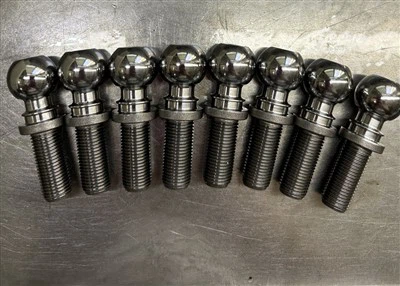
First off, let’s cut through the jargon so we’re all on the same page. An anti-roll bar (that’s the sway bar, for anyone who still calls it that) ball joint is the tiny, badass pivot point connecting the sway bar to either the control arm or the end link. It’s not just a fancy bolt – it’s the thing that lets your bar twist when you turn, so your truck doesn’t tip over like a shopping cart full of water bottles. And let’s be real, if that joint goes, your steering gets all squirrely, you feel every pothole, and if you’re off-roading? Game over. But maintenance doesn’t have to be a 4-hour garage grind. It’s small, consistent checks that take 10 minutes and save you thousands in repairs.
Let’s start with the most important one: regular visual inspections. I get it, you’re busy. But every time you get an oil change, or even when you’re washing your truck (pro tip: use that time to peek under), do a quick look at the ball joint. What are you checking for? Cracks, tears, or grime packed into the rubber boot – that little dust cover that keeps dirt, water, and road gunk out of the joint. The boot’s like the sock for your ball joint; if it’s ripped, your joint is toast. Water gets in, rust eats the bearings, and grit acts like sandpaper grinding everything down. I’ve seen a guy’s truck roll into my shop last month with a ball joint that had a boot torn all the way around – and guess what? It only took 3 months of not checking. He thought it was “fine” until the sway bar detached on the highway. Not cool. Now, when you check that boot, don’t just glance. Wipe a little of the grease around it (if there’s any) and run your finger along the edge. If there’s a tear, even a tiny one, mark it on your to-do list. Most boots are cheap and easy to replace – way easier than replacing the whole ball joint, which is what you’ll need if you let the grunk get in.
Next up: lubrication. Wait, hold on – I know some people say “modern parts are sealed, no lube needed!” But here’s the thing. Some anti-roll bar ball joints are sealed, but even the good ones (the ones we supply, mind you) can dry out after 50k miles, especially if you’re hauling heavy or off-roading. Sealed doesn’t mean “forever lube” – it means “protected from the stuff outside.” The lube inside is what keeps the pivot moving smooth, no squeaks, no wear. How do you tell if yours needs lube? Squeeze the boot – if it’s rock hard, that’s a bad sign. If it’s squishy and full of grease, you’re good. But wait, don’t just slather on any grease. Use a chassis grease, preferably a lithium-based one rated for high temps and pressure. Synthetic is even better if you do a lot of off-roading or heavy towing. And how often? For daily drivers, every 30k to 50k miles. For off-road rigs or work trucks that haul 10k lbs all the time? Every 15k miles. I’ve had a guy run his work truck with our ball joints for 80k miles without lube, and when he finally brought it in, the joint was so dry it sounded like gravel shifting. A quick lube job and it was good as new. Don’t skip this.
Now, let’s talk about the stuff that’s not so obvious: checking for play. This is the “push and wiggle” test you can do at home, no fancy tools needed. Park your truck on level ground, turn the wheel all the way left, then right. Grab the end of the sway bar link (that’s the part connected to the ball joint) and wiggle it as hard as you can. If you feel more than a tiny, almost unnoticeable give? That’s play. That’s your joint wearing out. Wait, but why is play bad? Because when there’s too much play, the joint isn’t transferring the sway bar’s force properly. You’ll feel that clunk when you go over speed bumps, or your truck will lean way too much in turns. And play doesn’t happen overnight – it builds over time, so catching it early means you can replace the ball joint before it fails completely. Pro move: if you have a friend helping, have them turn the wheel while you watch the ball joint. If it moves when the wheel turns, that’s play you need to fix. Most of the time, play is a sign that the lube is gone, or the boot’s torn. Catching it early is way cheaper than a full replacement.
Wait, what about off-road use specifically? I hear from tons of off-roaders that this part takes a beating. Rock crawling, mud bogging, splashing through deep water – that’s all bad news for anti-roll bar ball joints. Mud and dirt packed into the boot? That’s like getting sand in your shoe while hiking. It grinds the joint down, causes wear, and makes the pivot stick. For off-road rigs, I actually recommend adding an extra step: after every big trip (or every month if you’re out weekly), take a rag and clean the boot and the area around the joint. Use a little brake cleaner if it’s super grimy, then check the boot for tears and lube it if it’s dry. I had a customer who runs his Jeep out Moab every other month, and he swears by this routine. He’s gone 2 years without replacing a single ball joint, whereas his buddy who skips maintenance had to replace three on his last trip. Also, if you’re running a lifted truck or modifying your sway bar, make sure your ball joints are rated for the extra stress. The aftermarket parts we supply are built for that – not cheap, generic stuff that’ll bend under pressure.
Another common mistake people make: ignoring that squeak. If your anti-roll bar is making a high-pitched squeak when you turn the wheel or go over small bumps, that’s not normal. Most people think it’s a wheel bearing or a brake, but 9 times out of 10, it’s the ball joint. Squeak means the lube is dry, or there’s grit in the joint. Don’t wait for it to get loud – grab the grease gun and lube it, or check the boot. I had a lady bring in her sedan last year saying her “steering was squeaking like a old door hinge” – turned out her ball joint boot was torn, and it had a speck of dirt causing the noise. A new boot and a little lube fixed it, and she saved $800 she thought she’d spend on a steering rack.
Wait, let’s get real – what about when you need to replace the ball joint instead of just maintaining it? Because maintenance can only go so far. Even the best parts wear out. Signs it’s time to replace: tears in the boot that you can’t fix (if the joint is already dry inside, replacing the boot is useless), excessive play that won’t go away after lube, or rust on the joint itself. When you replace it, make sure you get a quality part, not the cheap off-brand from the auto parts store that falls apart in 20k miles. The ball joints we supply are built with heavy-duty bearings and rubber boots that can handle whatever you throw at them – daily driving, towing, off-roading. And if you’re replacing it, take the time to check the whole sway bar link too, not just the ball joint. Sometimes the problem is the link, not the joint itself.
Let’s wrap this up with a quick maintenance checklist, so you don’t forget. Print this out, tape it to your toolbox, whatever:
- Every oil change / every 3k miles: Quick visual check of the ball joint boot for tears/grime. Wipe it clean if needed.
- Every 15k miles (off-road/towing) or 30k miles (daily): Wiggle test for play. Squeeze the boot – if it’s hard, lube with lithium synthetic chassis grease.
- After every big off-road trip: Deep clean the boot and surrounding area, check for tears, lube if needed.
- If you hear a squeak or clunk around the sway bar: Stop what you’re doing and check the ball joint immediately.

Look, I’ve been in the auto parts game for 12 years, and I’ve seen so many guys skip maintenance and end up stuck. It’s not rocket science – it’s 10 minutes of your time every few months. Your anti-roll bar ball joint is a small part, but it’s one that keeps you safe, whether you’re driving to work or crawling over rocks. If you’re not sure if your rig’s ball joints are up to snuff, or you need quality replacement parts, hit me up. No pressure, just real talk from someone who’s worked on these things way too long to let you mess up your ride.
Ball Joint References:
- Automotive Suspension & Steering Technology, ASE Certification Study Guide, 6th Edition, Delmar Cengage Learning, 2021
- Off-Road Vehicle Maintenance & Repair: The Complete Manual, John C. Kershaw, Haynes Manuals, 2022
- Chassis Lubrication Best Practices, National Lubricating Grease Institute (NLGI), Technical Bulletin 1024, 2020
Taizhou Huazhe Auto Parts Co., Ltd.
As one of the most professional anti-roll bar ball joint manufacturers and suppliers in China, we’re featured by quality products and low price. Please rest assured to buy bulk high-grade anti-roll bar ball joint in stock here from our factory. For pricelist, contact us now.
Address: No. 2828, Binkang Avenue, Sanjia Street, Taizhou Bay New Area, Taizhou City, Zhejiang Province
E-mail: 19906762800@163.com
WebSite: https://www.huazheindustry.com/
